
I was really proud when I implemented my first relatively sophisticated agent at the end of 2024. It was an agent that actually made decisions on what demo assets to prepare based on the brand industry.
The feeling you get when you prove to yourself that the agent you built actually reduces your task time from 5 hours to 10 minutes is magical.
That was 270 days ago in world days, but in AI days, it might as well be a lifetime ago. The amount of AI progress we had since then could fit into decades.
It's wild how fast the agents we thought were game-changers a year ago are now just table stakes. Seriously, building an agent isn’t a moat. There are agents to build agents now!
My job is literally building AI Architecture, so I have to think about differentiating from competition in the AI world. So here are some grounding thoughts that navigate my approach:
1) Outcome-first Mindset
😑 AI Agents → 👍 Agentic Architecture
There’s a very natural link from “why” to “how” and then to “what”.
I’ve been in SaaS product and revenue teams for a while now. Every product or revenue decision requires these teams to primarily know the pain points and metrics first.
Why should agents be an exception?
Without following the first principles and identifying why you need an agent, you won't build an infrastructure for your agents. They’ll just be wrappers. That's why we now see enterprise AI adoption extremely low - everyone is ending up with a drawer full of half-useful bots.
Your outcomes will naturally guide you towards the right strategic mindset, then towards the right contextual architecture. With the right architecture in place, spinning up actually useful agents is easy - agents are just glorified prompts with a few tweaks (tool use, memory, etc). And prompts are cheap.
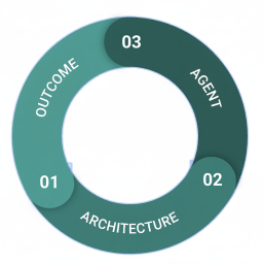
In my first month at my new AI Architecture role in Bloomreach, I've noticed that we need background intelligence layers to power our GTM/Revenue agents. These intelligence layers will be the backbone of our strategy.
2) Context Is All You Need
😑 Slick prompt wrappers → 👍 Good old data engineering
Outcomes give us the “why”. Now we continue with the “how”.
Twelve months ago, asking AI a question about a call transcript and getting an answer back felt magical. Do you feel the same magic today? I personally don’t.
The differentiator is context. When I say context, I’m not referring to dumping all call transcripts, all customer notes, all info into your LLM. Valuable context comes from unsexy, old-school data engineering.
Little-known secret: The increased context windows advertised by model vendors are a little misleading. More noisy context = more hallucination for AI.
The revolution for enterprise is our newfound ability to extract much more signal from the unstructured data. So what matters now is building graphs across multiple data points and data types, stitching together sources with different freshness, different noise levels, and different trustworthiness.
Without an architecture, your “AI” might be hallucinating in a pretty wrapper and your users aren’t even aware of it because your AI is confident. (Cough cough, most enterprise AI startups right now)
You remember the intelligence layers I mentioned in the previous section? That's the graph database of calls, emails, product usage, support tickets, Salesforce notes, Slack channels, and everything else that’s relevant for the contextual brain you need.
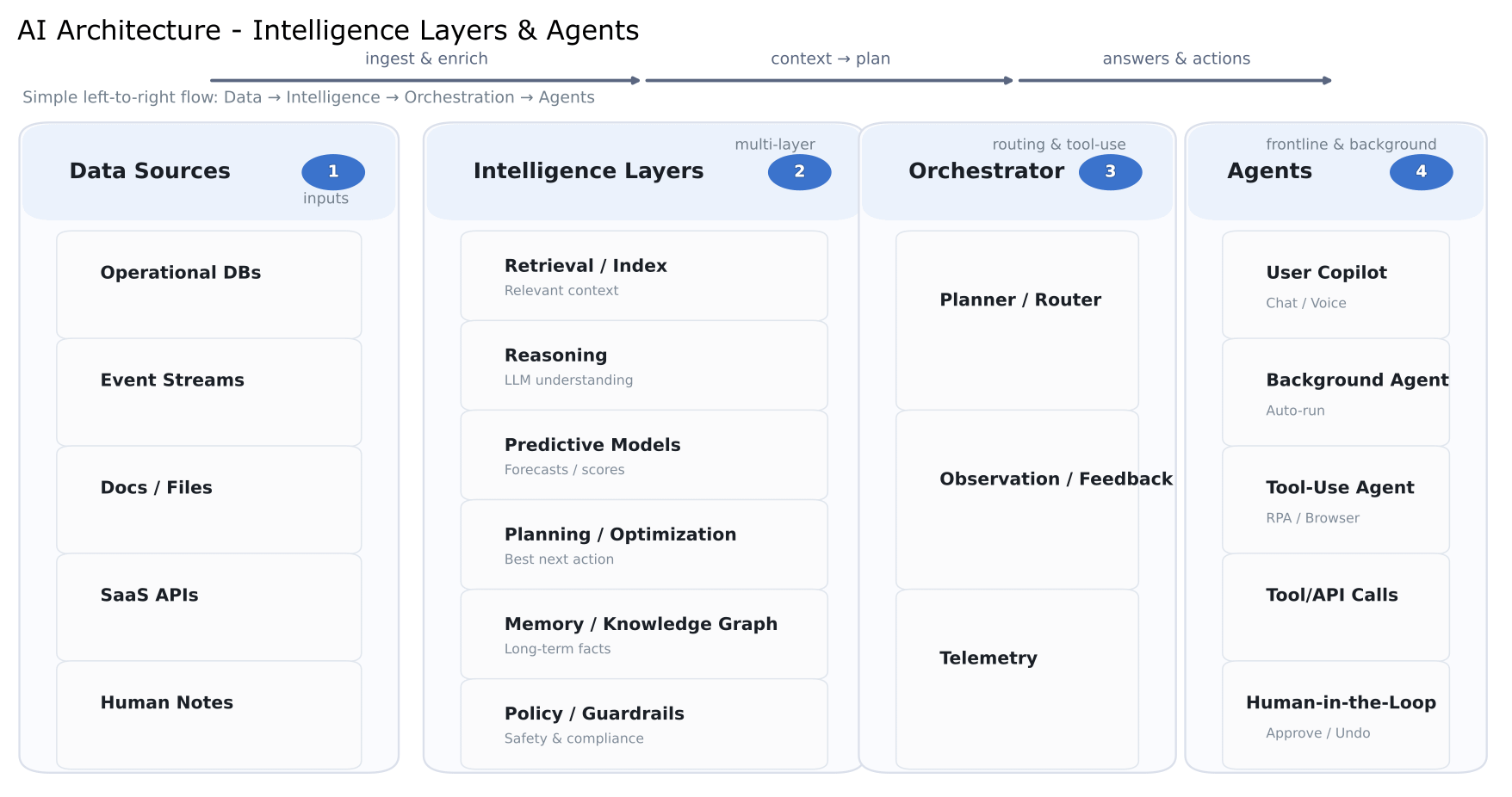
I’m building this every day. It’s not easy, but it’s more fun than you think. There’s a reason you hear about context engineering everywhere these days.
3) Systems Instead of UIs
😑 Reactive chats → 👍 Background agents
With the right context available, what starts to matter is how to surface it to take advantage of it.
Coolest products die because no one remembers to open them. How many times has your company brought in a shiny AI app that got 3 days of hype and then… ghost town?
I was speaking to an enterprise team before writing this very article. I asked how many knew about the AI product their company paid for 8 months ago. It’s a great tool after all. 3 out of 25 people raised their hands.
Adoption shouldn’t depend on users typing the magic prompts into a chatbox. That’s friction. The system has to come to you. Agents that work in the background come with 100% adoption because they monitor, notice, and act before someone even thinks to ask.
Think of your departments: Your reps don't want another app. Your support team doesn't want another login. Your execs definitely don't want to remember to ask for the forecast in the chat window every week.
I've been in the buying process of a couple of AI tools in the past few months, and this is pretty much the first question I ask: How accessible is the context? Do you offer webhooks? Do you have a native Slack app? Can we trigger agents upon events?
Adoption is the primary reason AI performance is lagging in the enterprise space compared to the consumer space. Don't lose that new signal you now have available from the vast unstructured data.
4) Context That Acts
😑 Insight → 👍 Action
We’ve made huge progress in “tool use” this year. Agents can call APIs, run scripts, fill forms. We’re probably still at earlier stages of this (tool hallucination is real), but we’ve reached here far quicker than I thought.
Seeing these advances, it's hard to stop at just answers.
I kept mentioning context in this article, and indeed insight through context helps us learn quicker, act better, and achieve more. But context can also inform the tools to take the next step and act.
Insight is your coach, and actions are your players. Insights will always look smart on paper, and it’ll likely have an impact. But I prefer if the impact is directly on the field. This reduces the middle layer, bottlenecks, and excuses.
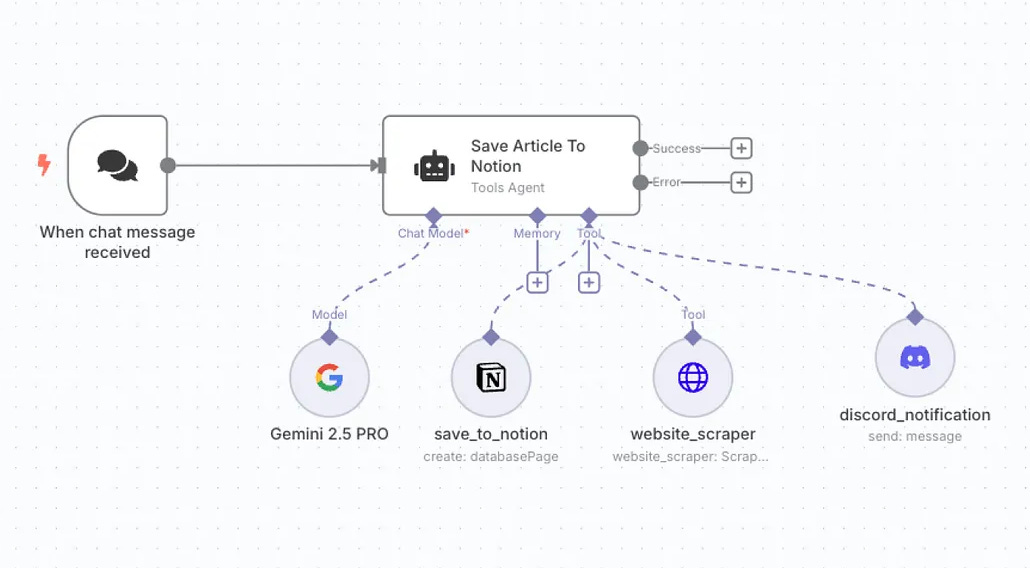
I'll admit, this is one area I'm still experimenting with. So far, my code-tool-layer tests have seen some mild success, but also some tool use hallucinations. Still, the trajectory is clear.
5) Your Job Is Safe… Ish
😑 Efficiency → 👍 Competitive Advantage
We all just got “automated context” injected into every part of our work. And yet, most of us seem content to use it just to save time. I'm guilty of the same - the agent I'm most proud of so far saves me time.
That’s fine, but it's now become clear that this can't be our primary game. Efficiency can be copy-pasted overnight by others. The people who win in the agentic era will be the ones who enhance their abilities with all these new signals at their fingertips.
In Bloomreach, as we're looking at saving time for marketers, we're also looking at how we can enhance the way we work beyond the current status quo. Our Product team is rethinking marketing campaigns with Agents, bringing a fundamentally new way of building personalization (get ready for some news). Our AI Transformation team is helping our clients to make their Bloomreach-related decisions easy, with their context and interests automatically mapped to the most relevant Bloomreach solutions. I’m also helping a few teams to progress with their AI architecture.
Conclusion
According to the MIT report, enterprise AI hasn't seen a lot of success. Unlike most AI enthusiasts, I won’t dismiss this report. The method of analysis is debatable, but the report highlights valid points. I think most companies were dazzled by the potential, so they focused on just releasing their agents. If you follow those who've seen success, you'll see that they are the ones who:
think about what they want to achieve first,
design their systems with consolidated context,
let those systems run in the background,
and minimize the gap between knowing and doing.
Everything else is just noise.